Most explanations of gallium nitride (GaN) chargers start in the wrong place. GaN is usually introduced as a faster way to charge a phone, as though the material itself pushed more current into a battery. It does not.
The meaningful difference between a GaN charger and a conventional charger is the material used for the switching device inside the power supply: silicon or gallium nitride. Everything a buyer notices day to day — charging protocols, rated output wattage, how quickly a particular handset fills — is decided elsewhere. Protocols are negotiated between the charger and the device, and the ceiling is set by the device, not by the semiconductor inside the plug.
Once that separation is made, the real consequences of the material swap come into focus. There are three, plus one widely repeated misunderstanding.
At a glance
- GaN replaces silicon in the switching device. It does not change charging protocols or rated wattage.
- At the same 65W rating, expect roughly half the volume and roughly 40% less weight.
- Peak conversion efficiency typically moves from 80–85% to above 90%, which is why the housing runs cooler.
- Three-port fast charging is a GaN design consequence, not a software feature.
- Charge speed on any given phone is unchanged. Protocol support decides that.
Silicon and GaN compared
| Dimension | Silicon (Si) design | GaN design |
|---|---|---|
| Switching device | Silicon MOSFET | GaN power device (wide-bandgap) |
| Practical switching frequency | Reference | Ten times or higher |
| Size at 65W | Approaches a small brick; large heatsink needed | Close to a compact 30W-era plug |
| Weight at 65W | About 200 g and up | About 120 g |
| Peak conversion efficiency | 80–85% | Above 90% |
| Multi-port fast charging | Hard to engineer beyond two ports | Standard: 65W 2C1A, 100W 3C1A |
| Unit cost | Lower | Higher, though falling |
1. Volume roughly halves
This is the most visible change, and it is a direct physical consequence of the material rather than a packaging trick. Switching frequency in a GaN device can run an order of magnitude above silicon. The higher the switching frequency, the smaller the transformer, the capacitors and the heat-dissipating hardware can be made. Compact GaN designs are not the result of clever layout; they are the result of physics.
Put a 65W GaN unit beside an older silicon adapter of similar output and the difference is close to twofold. Weight falls from a little over 200 g to roughly 120 g.
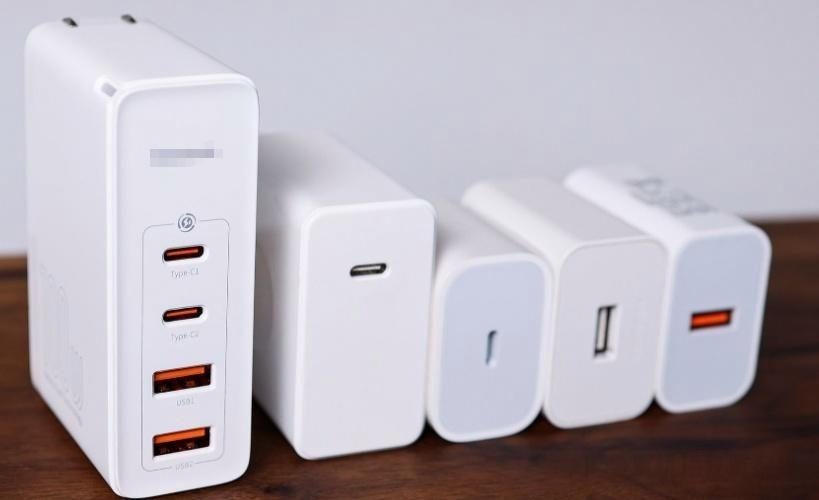
Who notices this in practice? Travellers, mainly. A single 65W GaN unit can feed a laptop, a phone and a pair of earbuds together, replacing three separate adapters and removing a couple of hundred grams from a bag. It also frees up wall sockets in hotel rooms, which is often the more annoying problem. For a charger that stays plugged in on a desk and never moves, the size difference is barely perceptible and should not drive the purchase.
2. Less waste heat, higher efficiency
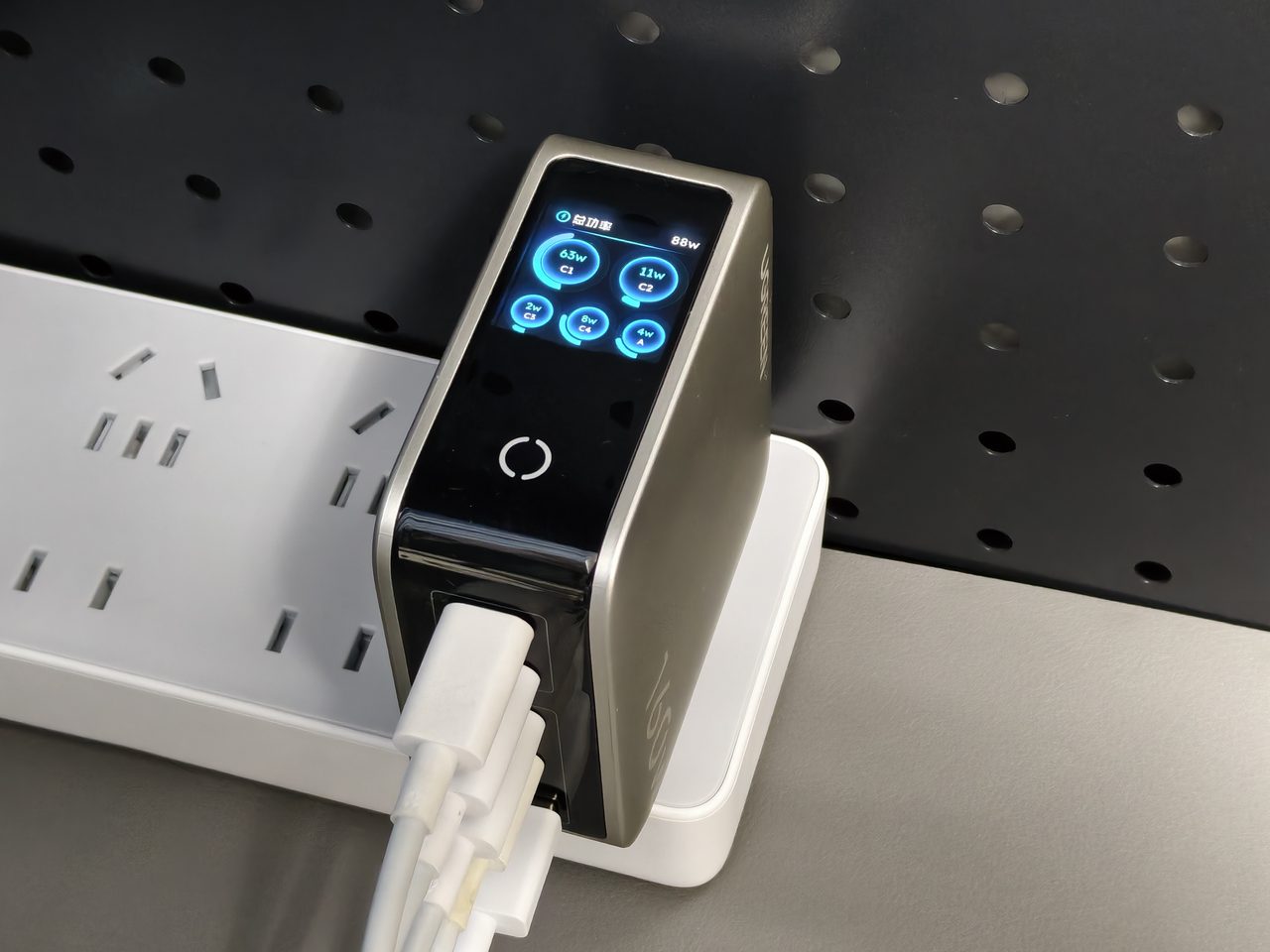
GaN has lower on-resistance than silicon, and switching losses are smaller. The practical result is a conversion efficiency typically above 90%, against 80–85% for a conventional silicon design. At the same output, less energy is thrown away as heat, which is why a GaN unit of the same wattage shows a more reassuring housing temperature after a long session.
Efficiency is not immunity
Any charger carrying a full load will get warm, GaN included. What GaN lowers is heat density and the rate of thermal derating. A low-cost GaN product with a thin thermal design will still run hot under sustained load. Efficiency on the datasheet is not a substitute for a properly engineered heatsink.
The device-level figures behind that reduction are tabulated in Inside a GaN charger.v>3. Multi-port fast charging becomes practical
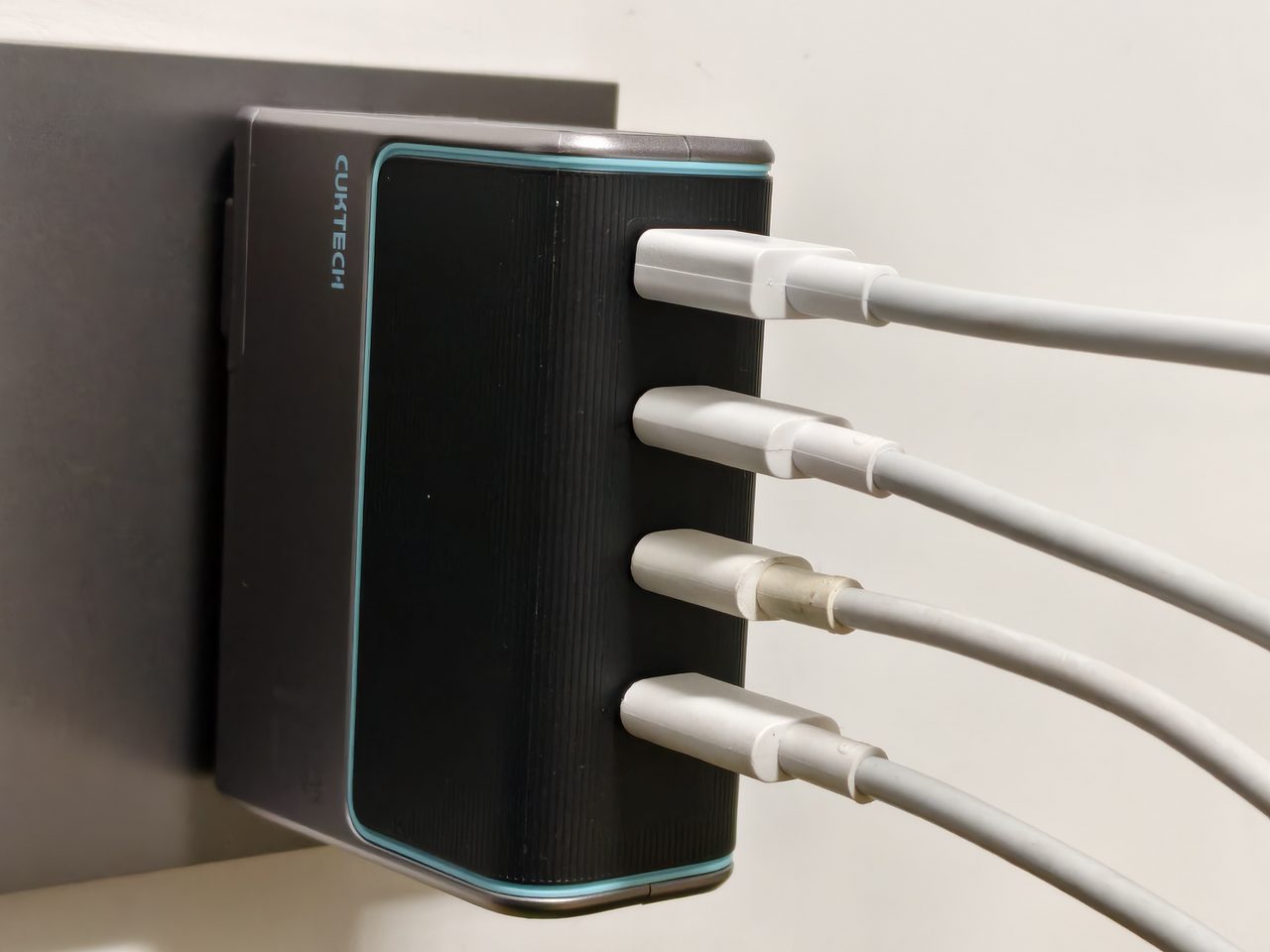
Building three fast-charging ports into a silicon-based charger used to be a losing battle against both size and heat. GaN changed the engineering balance enough that multi-port layouts became normal rather than exotic. Configurations such as 65W across two USB-C ports and one USB-A port, or 100W across three USB-C ports and one USB-A port, are effectively GaN formats. A single wall socket can then fast-charge a laptop, a phone and earbuds at once, which no conventional charger of the same footprint could do.
The power cliff on multi-port chargers
A total rating of 100W across three ports does not mean 100W is available to each of them. Once every port is occupied, many products drop to a fixed split such as 45W + 30W + 15W. A laptop that needs 65W will then discharge while it is plugged in. Independent testing of a first-party 65W 2C1A charger produced 35W + 25W + 5W with all three ports in use. If the power distribution table is absent from a product listing, treat that as a disqualifying omission rather than a detail.
What three simultaneous ports replace, in practical terms, is set out in One charger for everything.v>4. What does not change: charge speed
This is the misunderstanding that costs buyers the most money. A higher wattage on the charger does not produce a faster charge unless the device on the other end can accept it, and the negotiation is governed by protocol support.
- iPhone. Peak draw is around 27W. USB Power Delivery is the relevant protocol. A 140W charger brings nothing extra to an iPhone.
- Samsung. Reaching the full 45W depends on the charger supporting PPS. Without PPS, the same phone falls back to roughly 15W.
- Proprietary schemes. The 66W and 120W fast-charge modes used by some Chinese Android brands require the matching first-party charger. A third-party GaN unit typically delivers only the 10–18W baseline band over standard protocols.
In short, GaN raises the ceiling on how much power can be delivered from a given volume. Whether a device reaches that ceiling is a question for the protocol handshake, not for the charger's price tag.
5. Choosing by scenario
| Usage | Sensible choice | Indicative price |
|---|---|---|
| Phone only | A compact 20–30W silicon or GaN unit is sufficient; GaN buys nothing here | ¥20–45 (about US$3–6) |
| Travel: ultrabook, phone, earbuds | 65W 2C1A GaN is the sweet spot | ¥50–120 (about US$7–17) |
| Fixed desk, one socket for everything | 100W and above, multi-port GaN | ¥75–150 (about US$11–21) |
| Gaming laptop | 65W is not sufficient; the battery will drain under load | — |
Frequently asked
Does a higher wattage charger charge a phone faster?
Only up to the limit the phone accepts. Above that limit the charger simply idles at the negotiated level. Matching protocol support matters far more than buying extra wattage.
Does a GaN charger produce no heat at all?
No. GaN reduces losses during normal operation; it does not remove them. Every charger still relies on over-temperature, over-voltage, over-current and short-circuit protection, and in most markets those protections are a condition of certification.
The short version
GaN is not a way to make a phone charge faster. It is a way to make one charger do the work of three while taking up less space and running cooler. Paying a premium to carry fewer adapters is money well spent. Paying a premium for a larger number printed on the box usually is not.
Continue reading
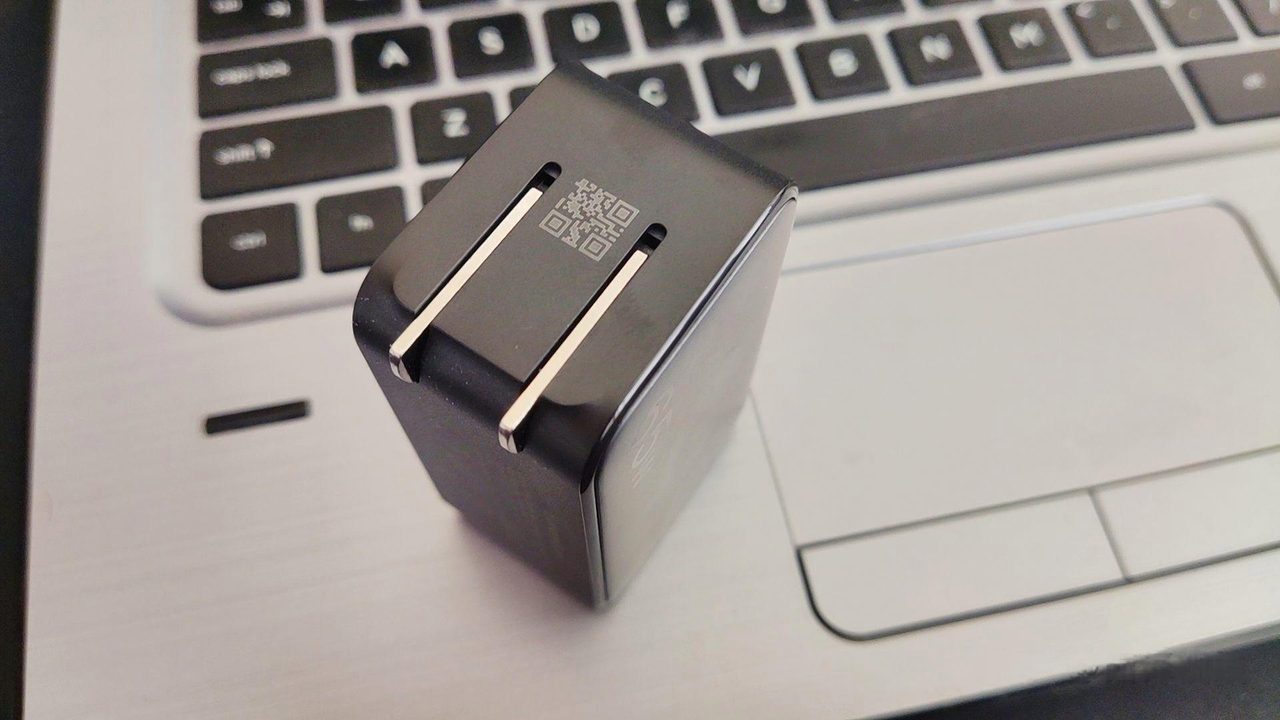
One Charger for Everything: Why a 65W GaN Unit Replaces Three Power Adapters
Three separate adapters for a laptop, phone and earbuds is a packing problem before it is a charging problem. A 65W three-port GaN unit solves it.
UGREEN 65W GaN Fast Charger Review: Design, Ports and Real-World Speed
Two USB-C ports, one USB-A port, a bundled 1.5 m cable and foldable pins. A close look at what the 65W GaN form factor delivers day to day.
Portability vs. Performance: How to Choose Between Popular GaN Chargers
There is no best charger, only the best fit. Match three everyday usage patterns to the right wattage, port count and footprint before comparing models.