Laptops, handheld consoles and thin-and-light notebooks have largely abandoned the bulky transformer brick in favour of USB-C power delivery. GaN chargers have accelerated that shift: the material change inside the power device allows a much higher output from a much smaller housing, with lower heat. The same unit can serve a phone, a tablet and a laptop.
The complication is range. Current products span 30W to 300W, single-port to five-port, with specification sheets that are rarely comparable at a glance. The six criteria below are the ones that actually determine whether a charger will suit a given household, followed by eight models that are currently worth shortlisting.
1. GaN against silicon: what the material change delivers
Before comparing models it helps to be clear about what GaN does and does not do. It changes the volume, the heat and the practical port count. It does not change the charging protocol or the maximum rate a device will accept.
| Dimension | GaN | Silicon |
|---|---|---|
| Material generation | Third-generation wide-bandgap semiconductor | First-generation |
| Heat resistance | Better; minimal derating when hot | Lower |
| Conversion efficiency | Better; typically above 90% | 80–85% |
| Volume | Generally much smaller | Larger |
| Price | Higher | Cheaper |
2. Count the ports, then check their type
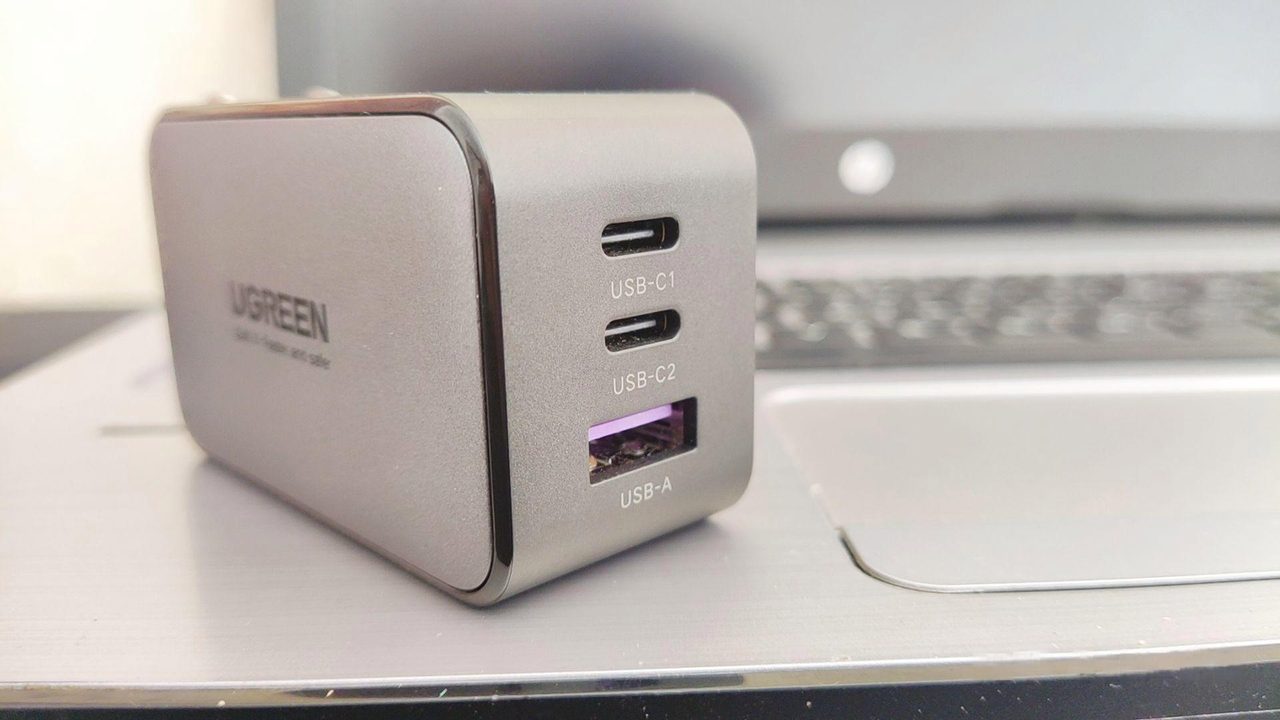
A single-port unit can charge only one device at a time, but the simpler construction allows a smaller housing and dedicates the full power budget to that device, so charging is faster. Multi-port units can serve several devices simultaneously, but share the total output, so each device may receive less than the headline figure.
Port type matters just as much. USB Type-A remains the most common connector on older cables and accessories: outputs are lower, but availability and compatibility are broad, which makes it convenient for ordinary devices. Devices that accept higher current — many phones and USB-C laptops — charge faster over USB Type-C, so port layout should match the cables actually in use.
| 1 port | 2 ports | 3 or more ports |
|---|---|---|
| No need to charge several devices at once | Two devices are occasionally charged together | Several devices are frequently charged together |
| Smallest and easiest to carry | The most common and the easiest to live with | One unit can supply everything |
3. Match the wattage to the device, not to the marketing
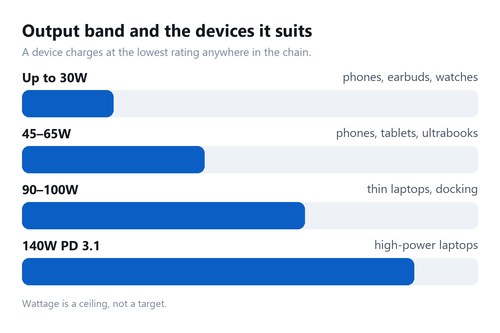
Wattage is the product of voltage and current, and is expressed in watts. Different device classes need quite different figures. A handheld console such as a Switch accepts up to 18W. Phones vary by model, mostly between 18W and 65W. USB-C laptops span five common steps: 29W, 30W, 61W, 87W and 96W, with high-performance machines going higher still. Because every device has its own ceiling, the sequence should be: identify the devices, note their maximum accepted rate, then select the charger.
| Up to 30W | 30–65W | Above 65W | |
|---|---|---|---|
| Suitable for | Phones, power banks, cameras, earbuds, tablets | High-capacity power banks, entry-level laptops, charging several devices at once | Large high-performance laptops, charging several devices at once |
4. Confirm support for the fast-charging protocols in use
As battery capacities have grown, older charging specifications have become inefficient, and a number of fast-charging protocols have appeared. The two most common are Qualcomm's Quick Charge (QC) and USB Power Delivery (PD), defined by the USB Implementers Forum. Both shorten charging substantially, and almost all current Apple devices support PD, so protocol support is the first thing to verify if charging time matters.
Several vendors also operate proprietary schemes: Samsung Super Fast Charging, Huawei SuperCharge, OPPO SuperVOOC and others. Where such a device is in use, the charger must support the matching protocol to reach the fastest rate. Standard-protocol charging will otherwise fall back to a lower baseline.
Protocol support is defined by the USB Power Delivery revisions plus the vendor extensions built on top of them, which is why two chargers of the same wattage can behave differently on the same phone.
5. Weigh the footprint if the charger travels
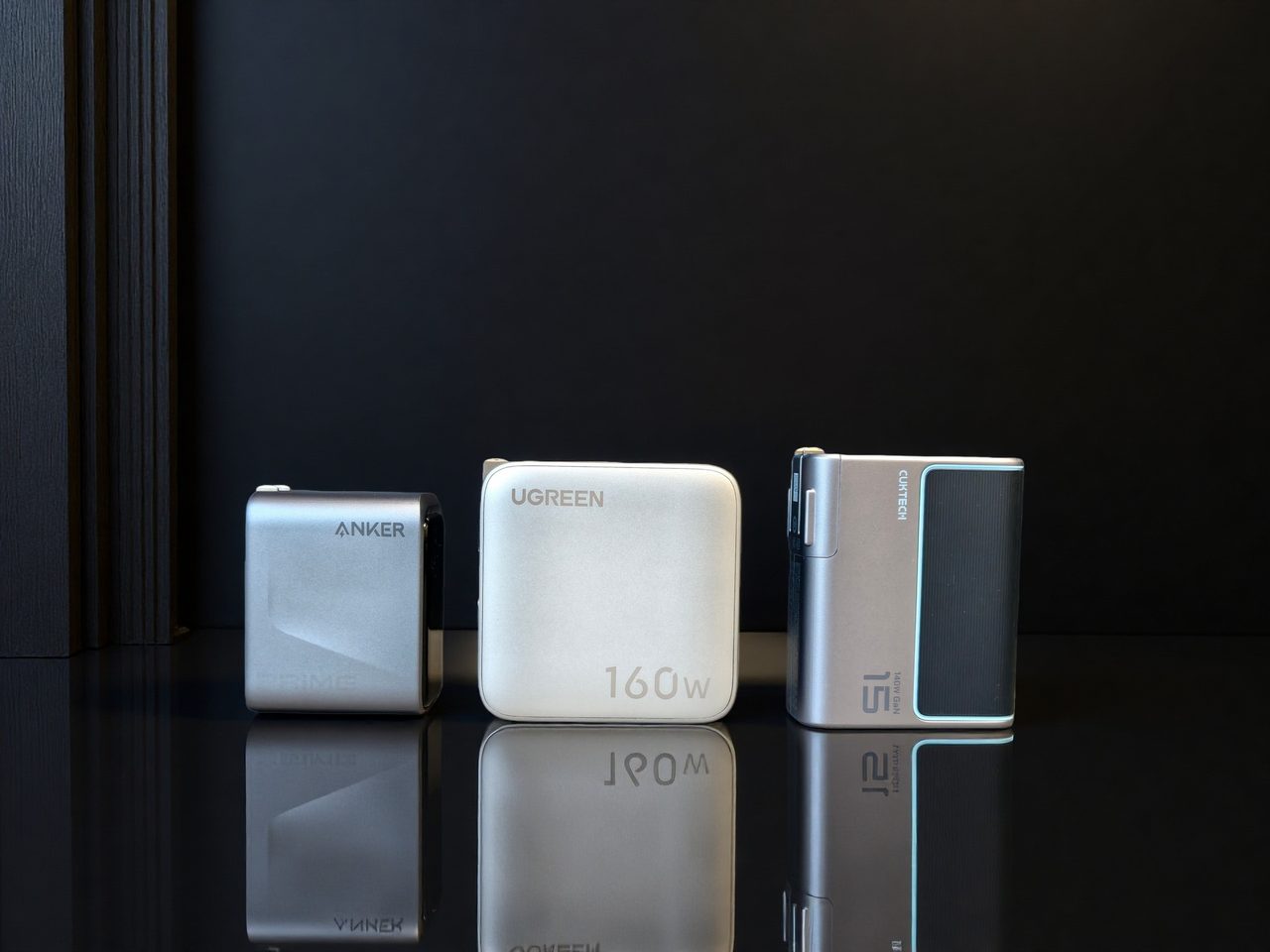
GaN reduces heat and therefore size, but a higher output still demands more space for thermal spreading and internal components. Sizes vary accordingly. Where a charger is carried regularly, the smallest model that covers the required devices is the better choice; where it stays on a desk, size can be traded for capability.
Footprint is the criterion on which the shortlist diverges most, and the trade against output is worked through in Portability vs. performance.
6. Treat safety protection as a requirement, not a feature
Any mains-connected product should be checked for built-in protection. GaN chargers sold in most regulated markets must pass a certification process before sale, so basic safety is present as a minimum. Beyond over-voltage, over-temperature and short-circuit protection, some models add electromagnetic shielding and electrostatic discharge protection. Certification marks are the quickest way to confirm this, and the relevant marks differ by market.
Eight models worth shortlisting
Each profile below records the manufacturer's stated specifications and an indicative street price. Specifications are reproduced for comparison and should be verified before purchase.
CUKTECH 30W GaN charger (A18C)
¥59 (about US$8)
Fits: replacing a first-party phone charger with something smaller that still handles a tablet or handheld console.
A compact unit built as a direct replacement for a bundled phone charger. Charging is quick and stable for recent iPhones and for Android devices, and compatibility is broad enough that one unit covers most day-to-day needs. The main attraction is size and weight: roughly the footprint of a small bar of soap, so it occupies little space in a bag. Despite the 30W output it can also supply a handheld console or a tablet. A high heat-resistance housing is paired with GaN thermal control that adjusts automatically when temperatures rise.
Stated specifications
- Total output
- 30W
- Ports
- USB Type-C
- Protocols
- PD 3.0, QC 3.0, AFC, PPS
- Protection
- Over-temperature, short circuit, over-current, over-voltage, low electromagnetic interference
OPPO 100W SuperVOOC fast-charge GaN kit
¥229 (about US$32)
Fits: buyers inside the OPPO or OnePlus ecosystem who do not want to compromise on appearance.
The most striking aspect of this revision is not the 100W rating but the finish: a soft-touch surface closer to a premium phone back than to a conventional adapter, in two colourways, small enough to disappear into a pocket. OPPO devices reach full rate immediately; other Android phones charge at a rate that comfortably covers daily needs. iPhones are supported but capped at the roughly 27 W their USB Power Delivery handshake accepts, not by the charger.
Stated specifications
- Total output
- 100W
- Ports
- USB Type-C × 1
- Protocols
- SuperVOOC, PD 3.0, PPS, UFCS, QC 3.0
- Protection
- Over-voltage, over-current, short circuit, over-temperature, electrostatic discharge, electromagnetic, surge
ANKER 65W GaN charger (A2667)
¥109.90 (about US$15)
Fits: multi-device users who want one unit for a phone, a laptop and a handheld console.
Anker's long presence in power products shows in the voltage stabilisation and intelligent output allocation: the charger adjusts output to the attached device, filling a current-generation ultraportable in under two hours, with fast-charge support for several major Android and Apple specifications. An 18-month warranty adds some reassurance. Foldable pins and a rectangular body give a footprint around the size of a lipstick, yet three ports allow the 65W budget to be spread across a phone, a laptop and a console.
Stated specifications
- Total output
- 65W
- Ports
- USB Type-C × 2, USB Type-A × 1
- Protocols
- QC
- Protection
- Over-voltage, over-current, short circuit, over-temperature, electrostatic discharge, interference
Lenovo Thinkplus 140W GaN charger (SMC140)
¥299 (about US$42)
Fits: buyers who want laptop-class power and three ports in one unit.
The principal advance here is combining a three-port layout with 140W, which suits households with several devices better than a single-port equivalent. The finish uses the brand's gloss-and-matte contrast language, and a 240W-rated C-to-C cable is included. Internally, roughly 12,000 mm² of metal heat-spreading material works alongside a graphene layer, and foldable pins make the unit easier to pack without risking damage to other items.
Two USB-C ports deliver 140W and 100W respectively, both capable of powering a laptop, while the USB-A port adds 30W for a phone or accessory. When ports are used together, intelligent allocation splits output between them; with both USB-C ports occupied, the manufacturer states a laptop and a phone receive approximately 100W and 35W.
Stated specifications
- Total output
- 140W
- Ports
- USB Type-C × 2, USB Type-A × 1
- Protocols
- QC, PD, PPS
- Protection
- Over-voltage, over-current, short circuit, over-temperature, over-power, interference, flame retardant
Baseus 65W GaN charger
¥94 (about US$13)
Fits: buyers who want a compact multi-port unit that plays well with crowded power strips.
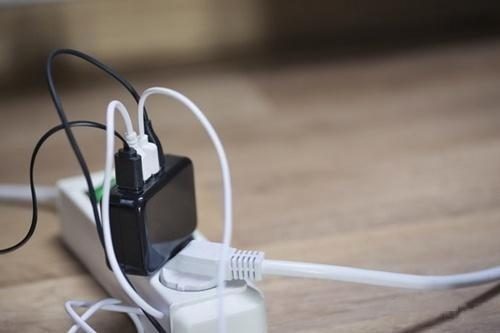
Designed to local electrical standards throughout, from the plug to the rated current and voltage, which reduces the chance of an incompatibility. Detail work is thoughtful: a status indicator sits on the top face without disrupting the overall look, and fast-charge protocol support is broad. The compact square-column body is shaped so that an extension lead is not blocked, which makes it easier to use alongside other adapters.
Stated specifications
- Total output
- 65W
- Ports
- USB Type-C × 2, USB Type-A × 1
- Protocols
- QC, PD, PE+, FCP, SCP, AFC
- Protection
- Over-voltage, over-current, short circuit, temperature, electrostatic discharge, over-power
ANKER 140W charger with a dual display (A2697)
¥259 (about US$36)
Fits: four-device households that want to see what the charger is doing.
Three USB-C ports and one USB-A port share a 140W budget. C1 and C2 each reach 140W, while C3 and A1 provide 40W and 33W. Protocol coverage includes PD 3.1 and PPS. A concealed dynamic display reports per-port power and temperature, which makes it easy to confirm that a device is genuinely fast charging. A 240W braided cable is included.
Stated specifications
- Total output
- 140W
- Ports
- USB Type-C × 3, USB Type-A × 1
- Protocols
- QC, FCP, SCP, APF, PPS, PD
- Protection
- Over-current, short circuit, over-temperature, termination voltage, ripple, over-charge
CUKTECH No. 10 GaN charger (AD1003)
¥137.20 (about US$19)
Fits: buyers who want 120W and three ports at a mid-range price.
A three-port design (2C1A) supporting 120W private fast charging on recent Xiaomi devices alongside PD 100W, PPS, QC, FCP and fusion fast charging. A single port reaches 120W; with all three in use the allocation is 45W + 33W + 18W. The GaN implementation keeps the body to 73 × 57 × 32 mm and 214 g. Input accepts 100–240V, which suits international travel.
Stated specifications
- Total output
- 120W
- Ports
- USB Type-C × 2, USB Type-A × 1
- Protocols
- PD, PPS, SCP
- Protection
- Over-voltage, over-current, short circuit, over-temperature, electrostatic discharge
REMAX GaN charger (RP-U100)
¥69.90 (about US$10)
Fits: buyers who want a well-finished mid-power unit at a low price.
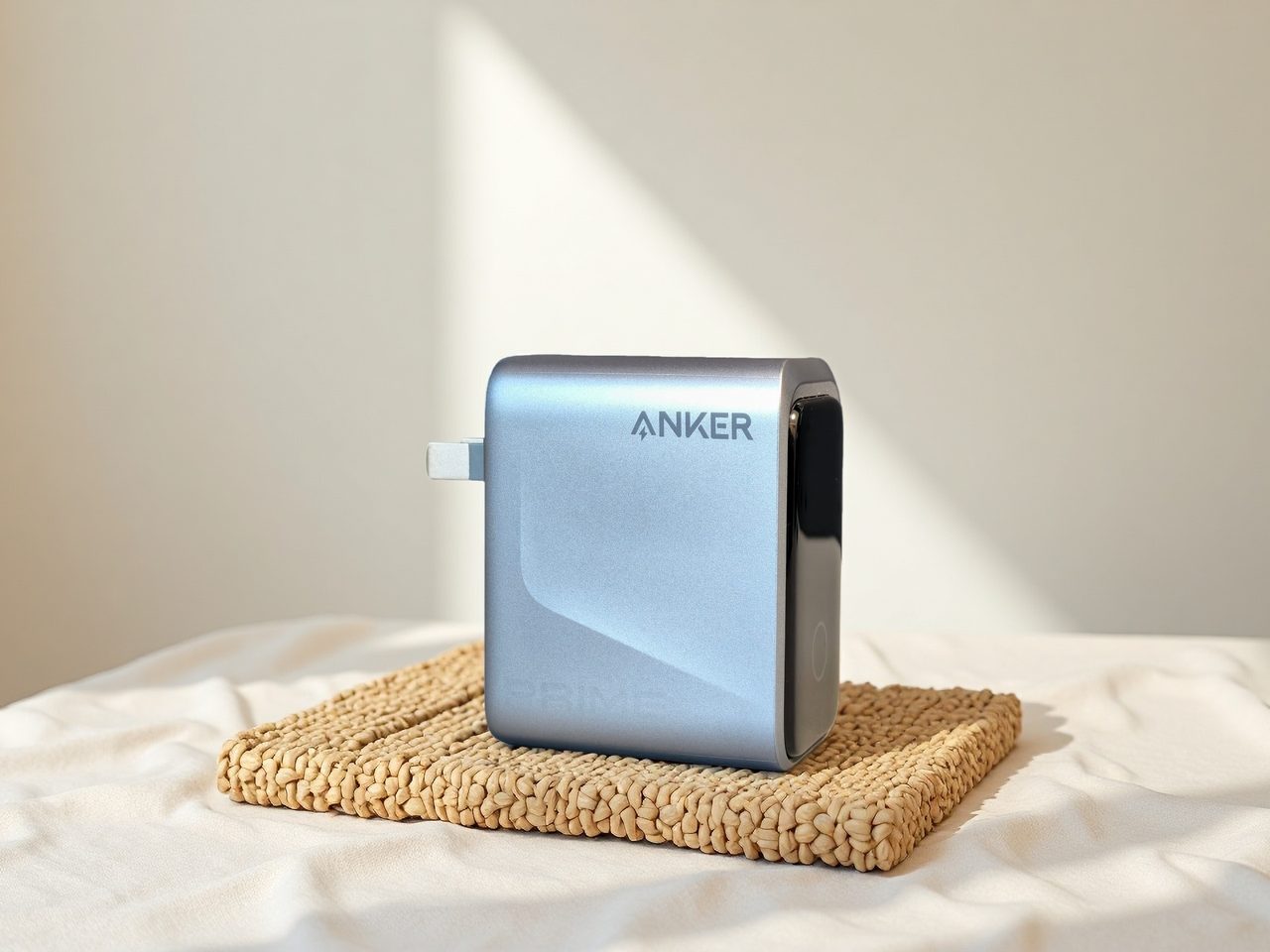
An area smaller than a bank card delivering 65W, enough for a high-specification ultraportable. The USB Type-A port supplies up to 18W and supports SCP and QC, so most bundled cables achieve an efficient charge. Output is high on each port when used individually, and the orange-and-white finish makes it one of the better-looking options at this price.
Stated specifications
- Total output
- 65W
- Ports
- USB Type-C × 2, USB Type-A × 1
- Protocols
- QC 2.0, QC 3.0, FCP, SCP, DCP
- Protection
- Over-voltage, over-current, short circuit, over-temperature, over-charge, over-discharge
Common questions
Why is charging slower than expected?
Charging requires the charger, the cable and the device to agree. All three must support the same fast-charging specification, and the cable must be rated for the current involved. A very large battery also simply takes longer to fill. When charging is slower than expected, the first step is to check each part of the chain rather than the charger alone.
What should be checked before taking a charger abroad?
Mains voltage and socket shape differ between countries. Where travel is frequent, a model accepting 110–240V input is the practical choice, together with a universal plug adapter. Airline regulations on what may be carried in hand luggage should also be checked in advance.
Do multi-port chargers reduce speed when several devices are connected?
Yes. The total output is fixed, so power is divided according to the design. A 65W dual-port unit typically splits as 45W + 20W. This is inherent to the allocation scheme rather than a quality problem. It is also why the power distribution table, rather than the headline wattage, is the figure worth checking at purchase.
Summary
GaN chargers are a young product category with unusually wide applicability: a single unit can supply a phone, a tablet, a laptop and a camera. Working through the six criteria above in order — ports, wattage, protocols, footprint, and protection — narrows the market quickly, and the eight models profiled here cover most of the sensible positions on the resulting spectrum. Where the household currently juggles several mismatched adapters, consolidating onto one correctly specified GaN charger is one of the clearer upgrades available.
Continue reading
One Charger for Everything: Why a 65W GaN Unit Replaces Three Power Adapters
Three separate adapters for a laptop, phone and earbuds is a packing problem before it is a charging problem. A 65W three-port GaN unit solves it.
UGREEN 65W GaN Fast Charger Review: Design, Ports and Real-World Speed
Two USB-C ports, one USB-A port, a bundled 1.5 m cable and foldable pins. A close look at what the 65W GaN form factor delivers day to day.
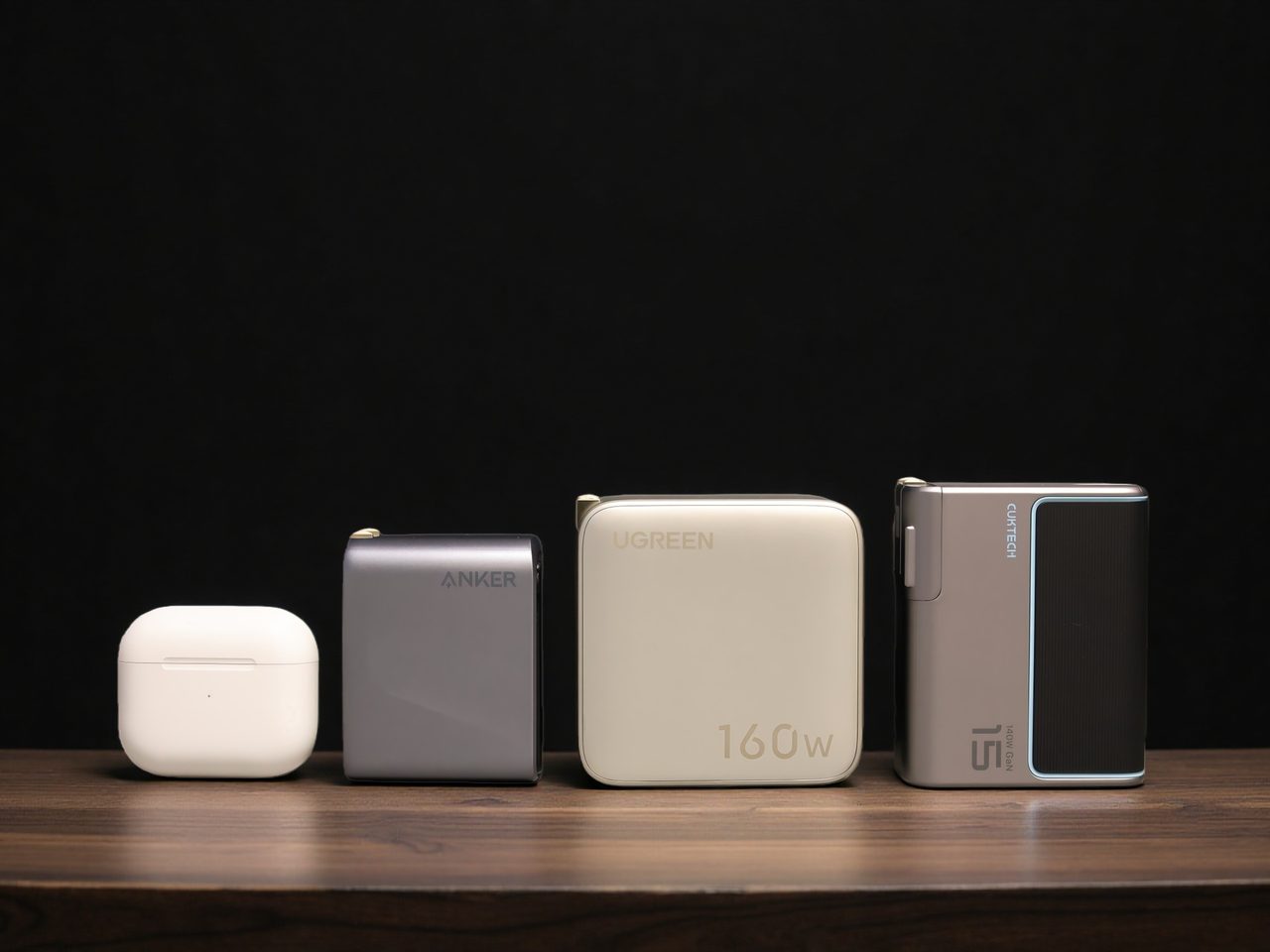
Portability vs. Performance: How to Choose Between Popular GaN Chargers
There is no best charger, only the best fit. Match three everyday usage patterns to the right wattage, port count and footprint before comparing models.