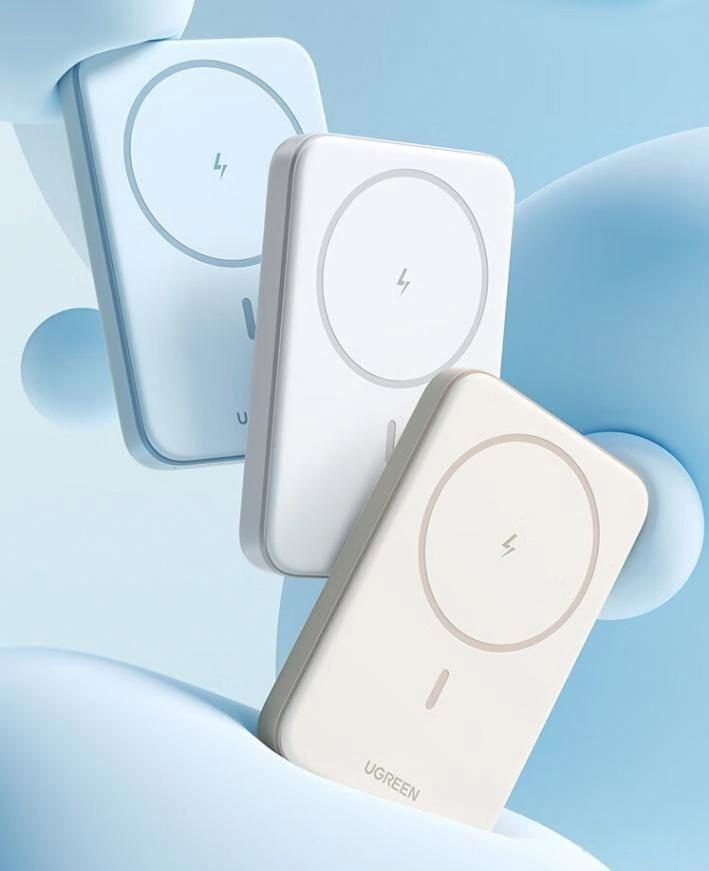
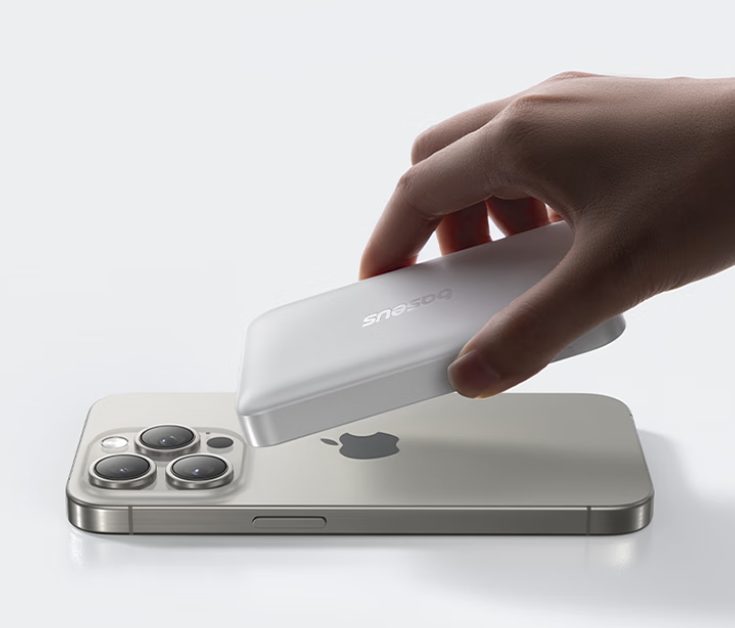
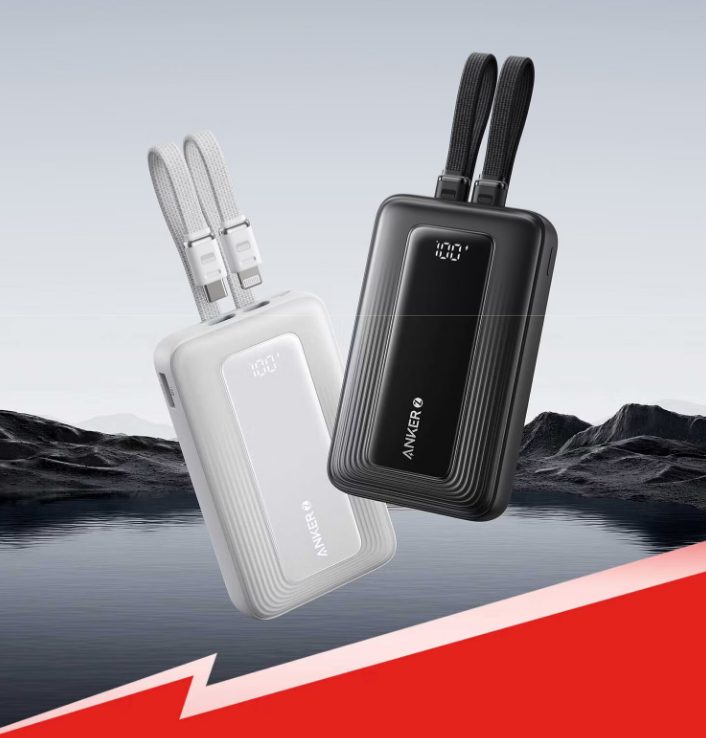
A power bank is sold on one number, and that number is the figure a buyer should trust least in isolation. The capacity on the packaging - 10,000 mAh, 20,000 mAh - is cell capacity, the total energy the internal cells can store. The quantity that reaches a phone is the rated capacity, which is always lower, and it is the rated figure that decides how many charges the product actually delivers.
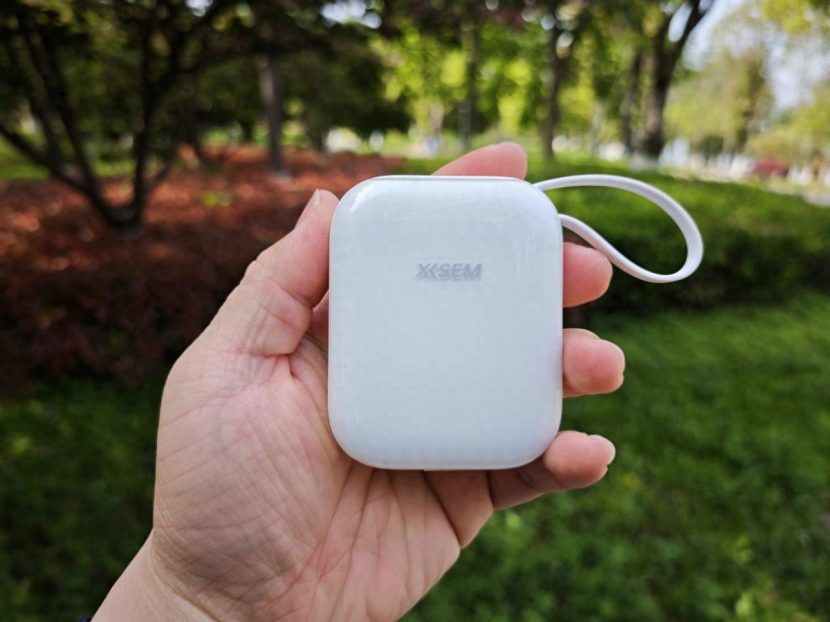
The gap between the two is physics rather than a defect. Energy is lost twice between the cells and a handset. It is lost once when the internal 3.6 to 3.7 V is stepped up to the 5 V, 9 V or 20 V that a USB port negotiates, and again inside the phone's charging circuitry. Rounded across the models surveyed, rated capacity lands at roughly 55 to 65 per cent of the cell figure. A 20,000 mAh unit therefore delivers around 12,000 mAh at its output port. Divide that by a handset's own battery capacity to get a realistic charge count: about three full charges for a 4,000 mAh phone, not five.
Rated capacity, and the two habits that catch buyers out
Products that print a cell capacity but omit a rated capacity are worth avoiding regardless of brand. Reputable manufacturers publish both, because the second is the number that determines usable performance. When only the larger figure appears, the omission usually means the smaller one compares badly with rivals at the same price.
The second habit is worth checking with a hand. Capacity scales with the number of cells, and cells have mass. A product claiming a very large capacity at an unusually low weight is either using a newer cell chemistry with genuinely higher energy density, or is overstating the figure. A claimed 20,000 mAh at 200 g does not exist at any price today; the same capacity at 400 to 450 g is routine.
A buyer who only needs a charge count can do the arithmetic directly. Multiply the rated capacity by about 0.85 for the additional losses in a wired charge, then divide by the phone's battery capacity. That estimate holds across the products surveyed closely enough to compare candidates.
Which capacity tier a particular buyer should actually be shopping in is worked through in Best power banks in 2026, which sorts current models by the capacity a job needs rather than by price.
Watt-hours: the number the airline counts
Airlines do not evaluate capacity in milliamp-hours at all. The limit that decides whether a battery may be carried on board is expressed in watt-hours, and the two units are not interchangeable. The conversion is direct once the nominal voltage is known:
| Nominal voltage | Rated capacity | Watt-hours | Carry-on status |
|---|---|---|---|
| 3.7 V | 10,000 mAh (10 Ah) | 37 Wh | Carry-on, no approval |
| 3.7 V | 20,000 mAh (20 Ah) | 74 Wh | Carry-on, no approval |
| 3.7 V | 27,000 mAh (27 Ah) | 100 Wh | Carry-on, at the unapproved ceiling |
| 3.85 V | 30,000 mAh (30 Ah) | 115 Wh | Carry-on with operator approval |
| 3.7 V | 45,000 mAh (45 Ah) | 167 Wh | Not permitted |
The practical consequence is that the 100 Wh threshold corresponds to somewhere between 26,000 and 27,000 mAh depending on the cell voltage a manufacturer chooses. The table above uses 3.85 V for the 30,000 mAh row because that is the nominal voltage printed on some current cells; the same pack rated at the more conservative 3.7 V gives 111 Wh. The threshold the airline enforces is unchanged. Buyers who travel regularly should read the watt-hour figure off the product label rather than infer it from the capacity marketing. The cabin rules themselves are covered in detail in the separate guide to flying with a power bank.
Converting a marked capacity into watt-hours is the first step, and the thresholds that conversion is checked against at an airport are set out in Flying with a power bank.
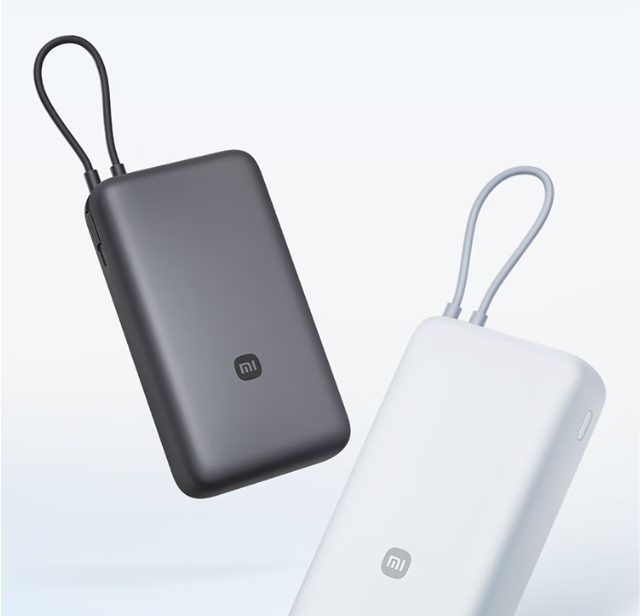
Cell chemistry and the safety margin
The cells inside a power bank fall into two families, and the difference shows up under stress.
Lithium-polymer cells are packaged in a flexible foil pouch. They are lighter for a given capacity, can be shaped to fit a slim enclosure, and vent rather than rupture under most failure modes. Almost every current-generation product uses them.
Cylindrical cells - the 18650 format is the common one - sit in a rigid steel can. They are mechanically tougher and cheaper to produce, but they carry more mass for the same capacity, and a steel-can cell that fails can release energy abruptly. They remain common in budget products and in high-capacity units where cost matters more than portability, and a well-engineered pack using them is not inherently unsafe. The distinction that matters is the quality of the protection board and the manufacturing tolerance, not the format alone.
A third option has moved from laboratories into shipping products. Semi-solid-state cells replace part of the liquid electrolyte with a gel or solid matrix, which raises the temperature at which thermal runaway begins and slows capacity fade across cycles. The cells currently cost more per watt-hour, so they appear first in products that compete on safety claims rather than on price per milliamp-hour.
Both cell constructions are lithium-ion variants, and the underlying chemistry is what makes the energy density and the safety characteristics differ as much as they do.
Output power, and the protocol that actually matters
A power bank's quoted output is a ceiling, and reaching it requires agreement between two devices about how to deliver power. That agreement is a fast-charging protocol, and mismatched protocols are the most common reason a product that looks fast charges a phone slowly.
| Protocol | Typical use | Notes for buyers |
|---|---|---|
| USB PD (Power Delivery) | Phones, tablets, laptops | Widest support; PD 3.1 reaches 140 W and above over USB-C |
| PPS | Android phones | Layered on PD; adjusts voltage in fine steps and controls heat during long charges |
| Qualcomm Quick Charge | Older Android handsets | QC 4 and later travel inside PD, so a PD port usually covers it |
| Vendor schemes | One brand's handsets | Huawei SCP, OPPO SuperVOOC and vivo FlashCharge are proprietary; check the product lists the scheme explicitly |
| Apple schemes | iPhone, iPad | Current models charge fastest over PD; the MFi programme covers Lightning accessories still in circulation |
Two practical points follow. First, a power bank's own recharge rate is a separate specification from its discharge rate, and it is the one buyers overlook. A 20,000 mAh unit that accepts 45 W on its input refills in three to four hours; the same unit limited to 10 W takes most of a night. Second, proprietary schemes are worth checking by name. A phone that charges at 66 W on its own brand's charger may fall back to 18 W on a power bank that supports only the open standards, and no amount of cable substitution changes that.
The negotiation rules are specified by the USB Implementers Forum, and the published specification rather than any product listing is the authority on which wattage tiers a device may request.
Ports, and the cable you no longer carry
USB-C has become the default on both sides of a power bank. On the output side a pair of USB-C ports plus one USB-A port is the current mainstream, and USB-C to USB-C is now the only cable an owner of a modern laptop and phone needs. On the input side USB-C is effectively universal, which means the same cable that charges a phone from the power bank can charge the power bank from a wall adapter.
Lightning input, once a differentiator for iPhone owners, is retreating. Apple's move to USB-C across its phone line means new accessories rarely include it, and a buyer whose next phone will be USB-C gains nothing from a Lightning port today.
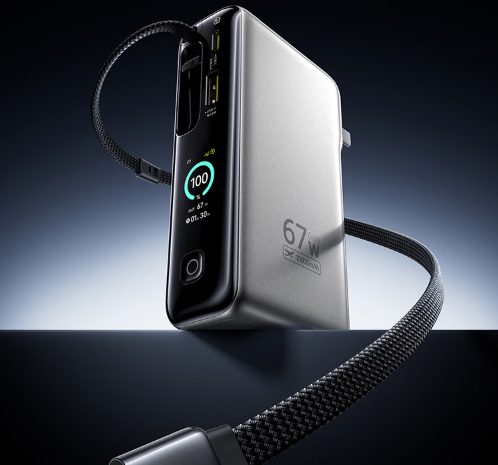
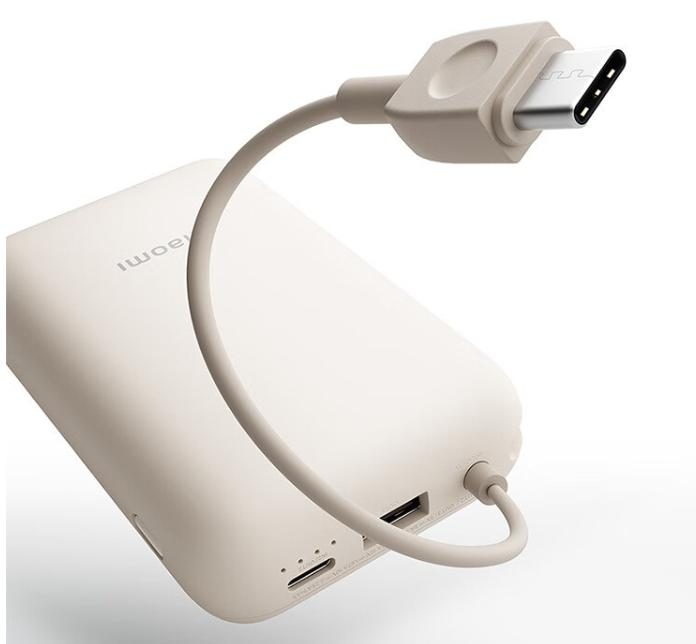
Built-in cables are the more interesting development. A captive USB-C cable removes the most commonly lost item from the equation and eliminates the cable's own resistance losses. The trade-off is mechanical: a captive cable is a moving part, and the products that survive it are those with a reinforced strain relief and a documented flex or pull rating. Where a figure like 10,000 insertion cycles is published, it is worth reading as a durability proxy rather than as a guarantee.
Weight and volume scale with capacity, not with price
Capacity, weight and volume rise together. A 10,000 mAh unit typically weighs 180 to 250 g and fits a jacket pocket. A 20,000 mAh unit runs 380 to 460 g, roughly the mass of a paperback, and is better suited to a bag. A 27,000 mAh unit approaches 600 g and is a deliberate purchase for people who spend long periods away from an outlet.
The choice usually follows the trip rather than the specification. A day out needs one charge and therefore 10,000 mAh. A long-haul flight, a multi-day hike or a working trip with a laptop needs 20,000 mAh or more. Buyers who carry a high-capacity unit daily and never exhaust it are paying in weight for energy they do not use.
Certification is a document, not a marketing word
Safety claims on packaging are worth exactly as much as the standards behind them. The schemes a buyer outside China will see most often are these:
| Mark or standard | Market | What it covers |
|---|---|---|
| IEC 62133-2 | International | Safety of lithium cells and packs; the base standard most national schemes reference |
| UL 2056 | United States and Canada | Power bank specific safety standard, covering output protection and enclosure |
| UN 38.3 | International transport | Transport testing every lithium battery shipped by air is required to pass |
| CE and UKCA | Europe, United Kingdom | Declarations covering safety, electromagnetic compatibility and restricted substances |
| FCC | United States | Electromagnetic interference limits |
| PSE, KC | Japan, South Korea | National electrical safety certification |
| CCC | China | Compulsory certification; since June 2025 also required to carry a power bank on a domestic Chinese flight |
Two habits follow from this. The first is to buy from a manufacturer that names the standard it was tested against rather than using a generic safety phrase. The second is to check recall notices: battery products are recalled from time to time, and a recalled unit is not made safe by being well treated.
A short buying checklist
- Read the rated capacity, not the cell capacity. If only one figure is given, that is itself an answer.
- Check the watt-hours if the unit will fly. Under 100 Wh needs no approval; 100 to 160 Wh needs the airline's; above 160 Wh is refused.
- Match the protocol, not just the wattage. A proprietary phone scheme has to be named on the product's specification sheet.
- Check the input rating. Recharge speed determines how useful a large pack is between trips.
- Weigh the trade-off honestly. Capacity buys charges and costs grams, and the right balance is set by how long the buyer is away from an outlet.
- Confirm the safety standard. A named standard and a recall history that is empty are worth more than any claim on the front of the box.