Capacity tier is the first decision in this category, and it is usually made for a buyer rather than by one. A pack that fits a jacket pocket, a pack that charges a laptop, and a pack that lasts a long weekend are three different products, and comparing them on price alone produces the wrong answer at every tier.
What follows groups current models by the capacity a buyer actually needs, and profiles each against the specifications that decide day-to-day usefulness: rated capacity, output and input power, protocol coverage, port count, cable arrangement, weight and market availability. Prices are indicative US dollar ranges rather than fixed figures, because retail pricing moves with channel and promotion.
One caveat applies throughout. The figures below are published specifications, not laboratory results. A product that claims 55 W output is described here as claiming 55 W; whether it sustains that figure into a particular handset depends on the protocol handshake and on how the pack manages heat.
The 10,000 mAh tier: one charge, pocket weight
This tier suits a day away from an outlet: commuting, a concert, a long walk with the camera in use. Expect 180 to 250 g and a rated capacity around 6,000 mAh, which is roughly one and a half charges of a modern handset and closer to two of a smaller one.
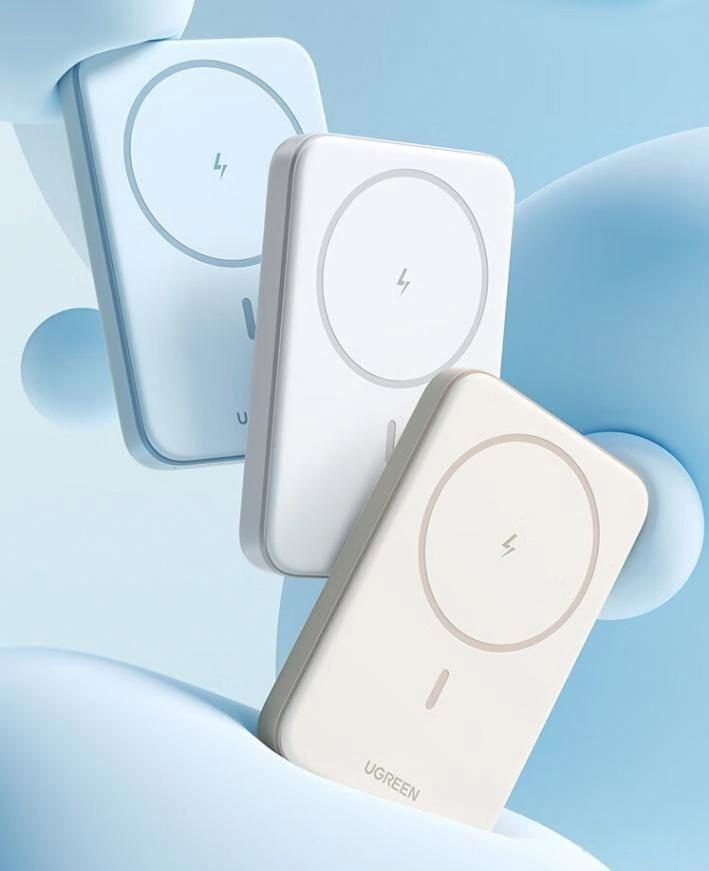
Magnetic 10,000 mAh packs with a wireless coil. These snap onto the back of a handset and charge it without a cable at 15 W, with wired output of 20 to 22.5 W available on the same unit. Protocol coverage usually spans PD, QC, SCP and FCP, and the wireless coil doubles as a charging pad for earbud cases and smartwatches. The trade-off is heat: a wireless transfer loses more energy than a wired one, so the pack runs warmer and delivers fewer usable watt-hours. See the companion comparison of magnetic packs for the mechanics behind that.
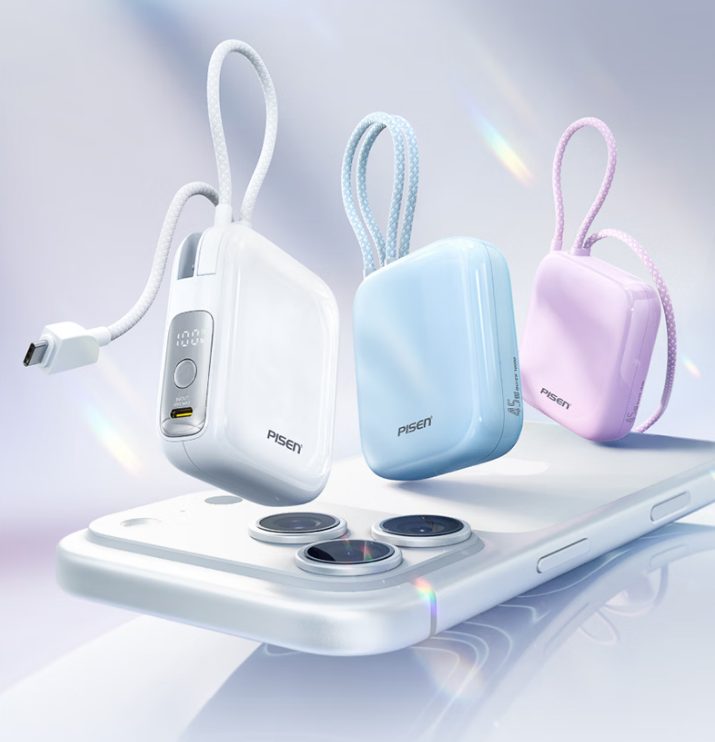
10,000 mAh packs with a captive cable. A permanently attached USB-C cable is the more practical choice for anyone who has arrived somewhere with a charged battery and an unusable one, because the cable cannot be left behind. Current models pair the captive cable with a PD port, cover 20 to 22.5 W output, and typically weigh under 220 g. Several accept pass-through so the pack and a connected device charge together from one wall adapter.
Semi-solid-state cells. A small number of current models use gel-electrolyte cells rather than conventional liquid-electrolyte lithium-polymer. The claim behind them is a higher thermal-runaway threshold and slower capacity fade rather than more capacity, and they carry a corresponding price premium. For a buyer whose main concern is what the pack does when something goes wrong, it is a defensible choice; for a buyer optimising for watt-hours per dollar, it is not.
The 20,000 mAh tier: the general-purpose choice
20,000 mAh is where a single pack starts to cover a laptop as well as a phone, and it remains the most useful capacity for anyone travelling. Weight lands between 380 and 460 g. Rated capacity is commonly 11,000 to 12,500 mAh, or roughly three phone charges. At 3.7 V the pack sits at 74 Wh, comfortably inside the 100 Wh carry-on limit, which is why this tier travels so well.
Models in this group separate along output capability rather than along capacity:
- 45 to 50 W output. Enough to charge a phone at full rate and to top up a thin-and-light laptop slowly. Usually three ports, sometimes four, with a display showing remaining capacity.
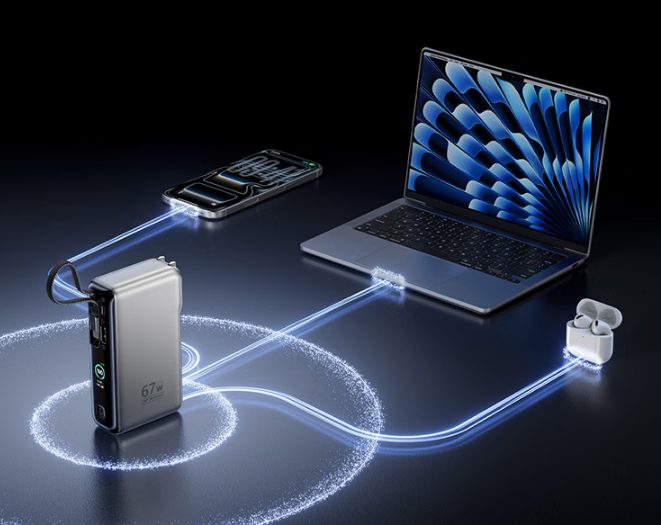
- 55 to 67 W output. The current sweet spot. Charges most ultrabooks at a usable rate, drives a phone at its maximum, and often supports PPS for Android handsets that use voltage-stepped charging. Several models in this band pair the output with an equally high input rating, which shortens the pack's own recharge to around three hours.
- High-output units with captive cables. A growing number of 20,000 mAh products integrate a retractable or captive cable rated for the full output. The design saves the cable and the port, and the durability question becomes the cable mechanism, which is why manufacturers have started publishing fold and pull counts for it.
| Output band | Typical ports | Laptop charging | Indicative price |
|---|---|---|---|
| 20 to 30 W | 2 to 3 | Not practical | US$25-40 |
| 45 to 50 W | 3 to 4 | Slow, thin-and-light only | US$35-55 |
| 55 to 67 W | 3, some with captive cable | Yes, at a usable rate | US$45-80 |
The 25,000 to 27,000 mAh tier: the carry-on ceiling
This tier exists because of the airline limit rather than because of demand for more energy. At 3.7 V, 27,000 mAh is exactly 100 Wh, the largest pack that can be carried without airline approval. Products at 25,000 mAh sit a little under it with margin for the exact cell voltage the manufacturer uses.
The unit of value here is the working day rather than the phone charge. A 25,000 mAh pack with a 30 W output will run a laptop through a transatlantic flight with power left over, and it removes the outlet hunt from a long trip. Weight is the price: 550 to 620 g, plus a cable.
Buyers in this tier should check two things specifically. First, whether the pack provides pass-through charging that handles a laptop and the pack simultaneously from one adapter; without it, a long layover becomes a sequence rather than a single charge. Second, whether the output is split sensibly when several devices are attached. On most multi-port packs the headline wattage applies to one port only, and adding a second device redistributes rather than adds.
The ceiling this tier sits against is a regulatory limit rather than a design one; the 100 Wh carry-on threshold and its consequences are covered in Flying with a power bank.
Matching the pack to the buyer
| Pattern of use | Capacity | Why |
|---|---|---|
| Commuting, day trips, one phone | 10,000 mAh, magnetic or captive cable | Pocket weight, one and a half charges, no cable to forget |
| Frequent travel with a phone and a tablet | 20,000 mAh, 45 to 55 W | About three charges, still inside the unapproved carry-on limit |
| Working trips with a laptop | 20,000 to 25,000 mAh, 55 W or more | Laptop charging at a usable rate plus phone headroom |
| Long-haul flights, festivals, field work | 25,000 to 27,000 mAh | A full working day per charge at the carry-on ceiling |
Two specifications deserve attention regardless of tier. The first is the input rating: a large pack with a slow input spends an evening on the wall, which is the most common complaint about high-capacity units and the easiest to check before buying. The second is the number of ports that can deliver full power simultaneously. A three-port pack that shares one high-power path between them behaves as a single-port pack whenever a second device is attached.
A buyer who wants to charge without a cable is trading capacity for convenience, and the arithmetic of that trade is set out in Magnetic power banks compared.
Reading the specification sheet
A product page rewards careful reading. Output is usually quoted as a maximum across all ports rather than per port, and the total is what the pack can produce, not what each device receives. Where a table of output combinations is published, it is a more honest document than the headline figure and worth more of a buyer's attention.
Certification is the other item to look for by name. A specification sheet that cites IEC 62133-2, UL 2056 or UN 38.3 has been written by someone who expects it to be checked. For products intended for air travel, the watt-hour figure should appear alongside the capacity, because that is the number an airline will read.
The protocol names on a specification sheet follow the USB Power Delivery revisions, which is why two packs can share a wattage figure and still behave differently.
Continue reading
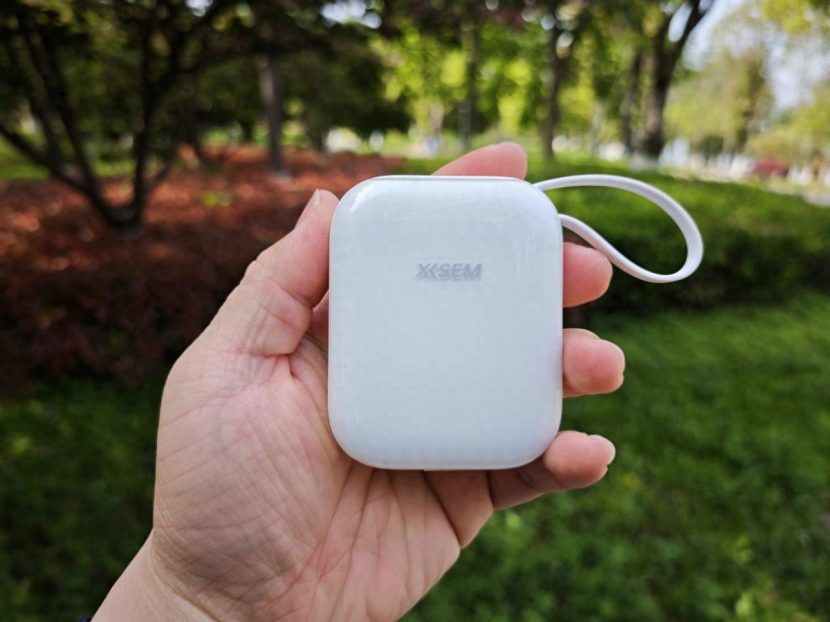
Power Bank Buying Guide 2026: Rated Capacity, Cells, Protocols and Ports
Rated capacity is not cell capacity, and the gap decides how many charges a pack really delivers. Plus cell chemistry, protocols, ports and the certification that matters.
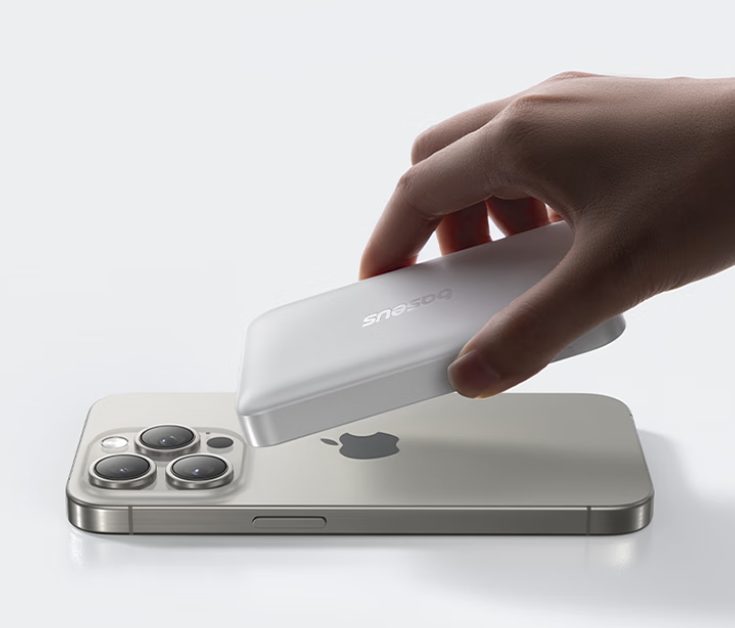
Magnetic Power Banks Compared: When 15 W Wireless Beats a Cable
A magnetic pack trades a third of its usable energy for not needing a cable. Qi2 alignment, the wireless-versus-wired gap, and the cases where the trade is worth making.
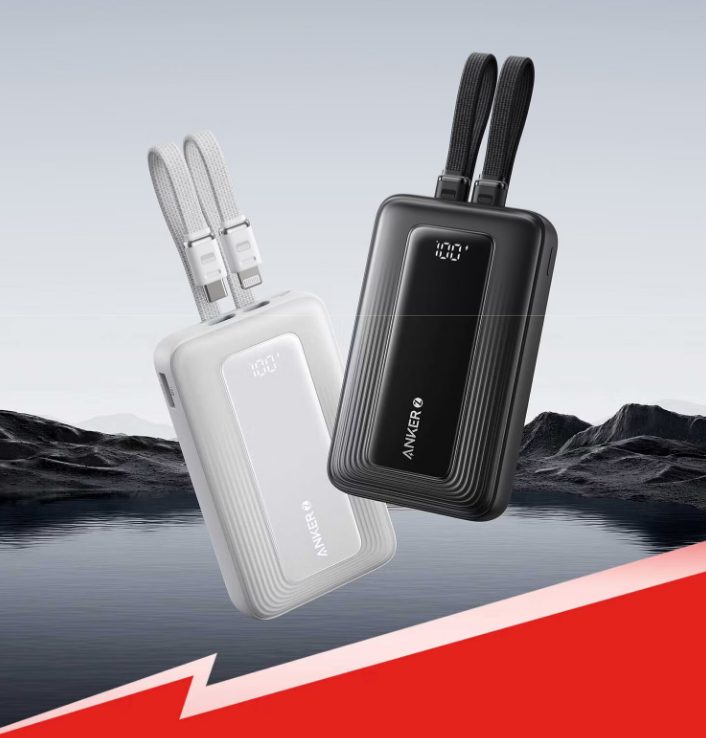
Flying with a Power Bank: Watt-Hour Limits and What Gets Confiscated
The 100 Wh and 160 Wh thresholds, why the pack can never go in a checked bag, and the regional certification rules that catch travellers out.